Elephant in the Room – Astonishing Parkinson’s disease Beyond Tremors

The Elephant in the Room art by Banksy at Barely legal exhibition in 2006

The expression “Elephant in the room” is an metaphorical idiom used to describe something which everyone knows, but no one wants to mention or discuss it for various reasons. The above image is a part of “controversial art” by famous British artist Banksy. This art named “Elephant in the room” was featured as a part of US exhibition – “Barely legal” in 2006. It had it’s own set of controversies. However, the primary objective of this art was to highlight that billions of people lived below the poverty line. This art perse was a metaphor to speaking about elephant in the room and controversies there off.

Parkinson’s Disease is well known disorder where in people know issues about tremors, slowness, stiffness and walking related issues. However, there are many more other issues, which is well know to the patients, caregivers, and doctors, but most of the time, these symptoms are either brushed under the carpet or not enquired upon at consultation. Currently these features are becoming more important in the management of Parkinson’s Disease and more efforts are being put into the assessment and treatment of these issues. These are broadly classified under the category of Non Motor Symptoms (NMS) under the management of Parkinson’s Disease. However, these for all of us is the Elephant in the room which needs to be more outspoken and appropriate management needs to be done.

The International Parkinson Disease and Movement disorders society (IPMDS), has come up with exclusive scales on non motor symptoms to address this concern of elephant in the room.

“Elephant in the Room” – Parkinson’s Disease
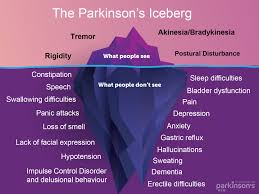
The Motor and the Non Motor symptoms of Parkinson’s disease.
Image source: Parkinsonnsw

There are various symptoms which qualify for elephant in the room for Parkinson’s disease and prominent among them are

  • Mood : All Parkinson’s disease patients might have some form of mood/behavioral changes, which is mostly under reported and only symptoms which become much bothersome are spoken about. Depression is one of the well know and needs to be tackled properly.
  • Sleep : Sleep disturbances are common and sometimes predate the onset of motor symptoms by many years. These symptoms might include vivid dreams, nightmares, shouting/yelling/enacting in dreams (aka RBD), restless leg syndrome (RLS).
  • Bladder issues : Urinary urgency, increased frequency, night time increased urinary frequency/volume are common bladder issues noted.
  • Constipation : Constipation is probably one of well accepted and acknowledged symptom, which is noted well before the onset of motor symptoms
  • Sexual dysfunction : Probably this is one of the least discussed non motor symptom, and mostly not addressed. The issue has to be discussed promptly by the patient or the doctor as its fairly treatable symptom
  • Excessive sweating / drooling / skin oilyness : These changes are noted in patients with Parkinson’s disease and skin changes can be noted.
  • Postural dizziness / fatigue : Patients with Parkinson’s disease tend to have

In the subsequent weeks, we will try to bring out exclusive write ups, including their symptoms, management, both on video and web write up. Effort will be put to get Kannada language audio/video files for the patients and care givers. Keep a lookout on the facebook page and youtube channel.

READ MORE
Awareness

European Academy of Neurology Interview with Dr. Prashanth LK on COVID19 Impact

Prashanth

Prof. Elena Moro, Secretary General of European Academy of Neurology, had interview with Dr. Prashanth LK on COVID19 and its impact on medical practice at ground level. This is published in the the European Academy of Neurology (www.ean.org) EAN pages section

Brief excerpt of the interview with Dr. Prashanth LK is below and the rest can be accessed at the EAN Pages section (https://www.eanpages.org/2020/11/01/covid19-around-the-world-clinician-interviews-on-experience-and-impact-of-the-virus/).

1.     How has COVID19 and national measures to control it affected routine and emergency neurology service delivery in your country? How have you adapted to deal with the impact?

     The speed and rampage of COVID19 pandemic have paralysed every country in 2020.  No matter what, the amount of measures taken at every level, appears to be miniscule in front of its wrath.  The neurology community across India was gearing up for the COVID19 breakout but, the impact of COVID19 was beyond anyone’s perception until it hit upon us. The Annals of Indian Academy of Neurology (Official journal of Indian Academy of Neurology), came up with a special supplement of COVID-19 in early April 2020, which addressed various issues in relation to management of COVID-19 and neurological disorders.  The special issue included consensus statements on management of various neurological disorders and care related points.   At ground level in routine neurology care the scene was dramatically changing minute by minute.  The emergency departments were filling up with COVID19 patients and it appeared as if all the neurological emergencies have ‘vanished’ – which ended up being like a calmness of ‘eye of the hurricane’, before it hit us.  The pattern and ‘ease’ of neurological practice has significantly changed with masks, face shields, personal protective equipment (PPE) kits and whole attire changing from a formal dressing to “Scrub suit” / “PPE suits” taking the forefront.  This has definitely drained down a significant energy and amount of work output, but it appears like this will become a new norm for near future.  Another interesting change has been the raise in tele consults / video consults.  The medical practicing laws were quickly amended to accommodate the requirement of telemedicine.  COVID19 has been a blessing in disguise for the telemedicine and this has become a main stay for most of the stable follow-up patients, albeit everyone does miss the personal/social touch with in-person consults.      

2.     Have you seen many people whom you were concerned had neurological complications of COVID19 infection? What are the most common neurological manifestations of COVID19 in your region?

COVID19 pandemic has made every speciality to gear up for its care.  Most of us are working in regular COVID19 care which caters beyond neurological issues.  The neurological manifestations of COVID19, which I have seen can be considered as those primarily related to COVID-19 infection, secondly to worsening of pre-existing neurological disorders due to COVID19 and finally those due to psychological effects of COVID19 breakout.  The core neurological issues related to COVID19 included primarily thrombotic events in the form of acute ischemic events, cerebral venous sinus thrombosis in people, in whom no other risk / aetiologies could be pointed out.  In addition, encephalitis / encephalopathy presentations were also seen in patients with COVID19.  Many patients with severe COVID19 infections were reviewed for neurological consults and considered to have encephalopathies secondary to systemic COVID19 infection.  The second set of problems was people with pre-existing neurological disorders like myasthenia gravis, multiple sclerosis, parkinsonism coming with acute worsening on a background of COVID19 infections.  The third set of people were those who were not directly infected with COVID19, but with trauma of separation, quarantine, fear of not able to reach out to their doctors, limitation of social life leading to worsening of neurological symptoms especially with those of Parkinsonism disorders and dementia. 

3.     What are your main concerns for the future in regard to COVID19? What do you think are the key measures and contingency plans necessary to ensure high quality care for people living with neurological diseases during this pandemic?  (read further)

READ MORE

Parkinson’s Disease challenge and advise collage from Doctors across India

https://youtu.be/F3XH503h9I0

#PDchallenge was initiated on July 22nd 2020 on the occasion of World Brain Day to create awareness about Parkinson’s Disease. The challenge included, showing various activities with a theme to win over Parkinson’s Disease. It included videos of patients, caregivers, friends, relatives, movement disorder specialists, neurologists, neurosurgeons, therapists, researchers from across the globe.

The following collage video shows the various Movement Disorders specialists, Neurologists, Neurosurgeons, researchers taking part in the #PDchallenge, released on August 15, 2020. This matches with the essence of ‘Mile Sur Mera Tumhara‘ theme of Unity in diversity theme song launched on August 15th 1988.

READ MORE

World Brain Day – #PDchallenge

#PDchallenge

Lets Shake the Parkinson’s Disease

World Brain Day 2020

#Parkinsons

Every year July 22nd is commemorated as WORLD BRAIN DAY.  Annually one disorder will be highlighted to increase the awareness of the disorder.  World Brain Day 2020 is dedicated to raising awareness for Parkinson’s Disease, a neurodegenerative brain disorder affecting more than 70 lakh people of all ages worldwide.   This year, World Federation of Neurology and International Parkinson and Movement Disorder Society have joined together to end #parkinsons.

In this context, here in India, we are doing an active Parkinson’s Disease awareness campaign in the form of #PDchallenge.  The challenge is open to all patients, caregivers, friends, health care workers and everyone across.  The primary goal is to create awareness about Parkinson’s Disease.  Please do a brief video about your active movements or agility and challenge your family members, friends, colleagues to show their agility. Come lets create awareness about Parkinson’s disease and remove the myths about it.  Let’s create awareness by challenging our friends and relatives

10 things about Parkinson’s Disease for this World Brain Day:

  1. Parkinson’s Disease is neurodegenerative disease affecting the brain
  2. More than 70 Lakh people of all age groups affected by Parkinson’s Disease Worldwide.
  3. Parkinson’s Disease classically causes Slowness, Stiffness, Tremors and Balance problems.
  4. Mood changes, Anxiety, Depression, reduced smelling ability, Sleep disturbances, Urinary issues, Constipation, can also be affected.
  5. The Scare of the name “PARKINSON’S DISEASE”, make many people to loose hope in life.
  6. Parkinson’s disease is treatable
  7. People affected with Parkinson’s disease can lead a near normal quality of life.
  8. Good treatment options are available including mediations, injections and surgeries.  
  9. Active life style and Exercises form the most important part of management of Parkinson’s Disease.
  10. Come on the World Brain Day, “Lets Shake the Parkinson’s”
READ MORE
Dance for PDnews

Dance for Parkinson’s Disease – Learn Online

The COVID-19 breakout has lead to a significant limitations in mobility of people across the world. This is primary concern for People with Parkinson disease and Parkinsonism disorders. In these disorders people need to do workouts on daily basis to have a good quality of life. Many people require supervised care and some require a group to motivate the exercise schedules. This has been significantly hindered by the current #pandemic outbreak and #Lockdown. To over come this modern day problem, people have adapted and improvised to bridge the current issues. In this context “Hirshikesh’s Center for Contemporary Dance” in Pune, has been successfully working on online dance programs for Parkinson’s Disease and Parkinsonism Disorder patients. The dance program for Parkinson’s disease facilitators integrate movement from Indian classical and modern dance, and choreographic repertory. This initiative has been helping many Parkinson’s Disease people from across India.

Difficulties with gait and balance are common among individuals with Parkinson disease (PD), contributing to an increased incidence of falls. Gait changes include slowness of walking with short, shuffling steps and a flexed posture, and may also include festination and/or freezing of gait. Aspects of walking that appear to be particularly impaired include dual tasking, turning and walking backward

Given the potential benefits of exercise for those with PD, recommendations have been made regarding key components of an exercise program designed for those with PD. The recommendations include four key areas: 1) cueing strategies to improve gait, 2) cognitive movement strategies to improve transfers, 3) exercises to improve balance, and 4) training of joint mobility and muscle power to improve physical capacity. Emerging evidence also suggests that aerobic training, such as walking on a treadmill, may result in improved quality of life, reduced disease severity as reflected by lowering of UPDRS-III scores, and improved aerobic capacity

Dance as a group-based treatment for Parkinson’s disease (PD) incorporates physical exercise, cognitive tasks, sensory experience (music), emotional expression, and social interaction. As such a multidimensional activity, dance has the potential to address many of the challenges faced by patients. Indeed, in addition to significant motor and cognitive impairment, patients are troubled by mood changes and social isolation. Therefore, dance may highly impact the quality of life in patients with PD.

READ MORE
Parkinsons diseaseAwareness

Destination Unknown – My Journey with Parkinson’s – An Autobiography by Rajeev K Gupta

Destination Unknown – My Journey with Parkinson’s

Destination Unknown – My Journey with Parkinson’s, is an autobiography of Mr. Rajeev K Gupta, who is diagnosed with Young Onset Parkinson’s Disease.   The book fills a long overdue void about personal experiences about Parkinson’s Disease, especially from Indian Context.  It goes through the various phases from, ‘Overcoming the Shock’ attached with diagnosis of Parkinson’s disease in a young active professional life.  The story leads on to explain the “Million Dollar Decision” on how and when to reveal the diagnosis to the family members and on professional front.  It also gives insights about how to cope with the diagnosis, adapt and overcome, to win over this ‘Mental Game’.  Mr. Gupta, further goes into the depth of various treatments he received, their benefits / limitations.  Later, he continues on his decision on ‘Deep Brain Stimulation’ surgery and his whole experience from the point of considering it to the post-surgery outcomes.   The book also gives a Q&A section, which will be helpful for all Parkinson’s disease patients, to understand about Parkinson’s disease and its treatment.  Overall, a must read for every Young Onset Parkinson’s Disease Patients and their families.   The Book is currently available on various online sellers including Amazon, Kobo, Google Play books and on publishers site (Notion Press).

READ MORE
Chorea

Huntington’s Disease Awareness Month and Clinic

Huntington’s disease patients and families require special attention and care. Month of ‘May’ is #HDawareness month. There are various activities going on world wide during this #Lockdown time to create more awareness about #Huntingtonsdisease.

We are running the special Huntington disease clinic every fourth Wednesday of the month. This is a FREE CLINIC for Huntington’s disease patients and families. Dr. Prashanth LK is European Huntington Disease Network Associated member and credentialized investigator of Huntington Study Group.

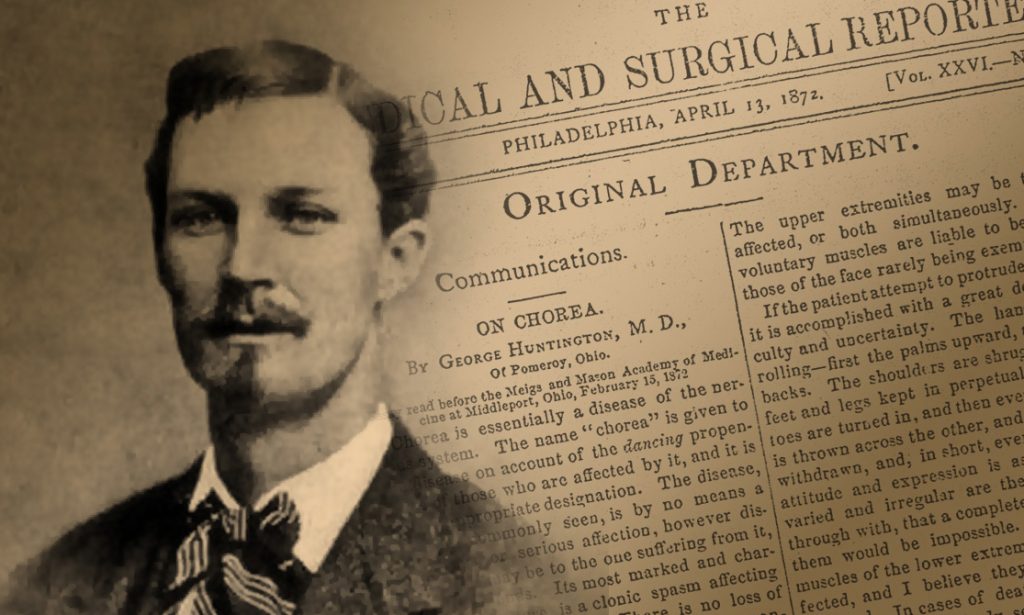
Huntington disease is named after George Huntington (April 9, 1850 – March 3, 1916) was an American physician from Long Island, New York who contributed the clinical description of the disease. Dr. Huntington wrote his paper “On Chorea” when he was 22 years old, and was first published in the Medical and Surgical Reporter of Philadelphia on April 13, 1872.

Huntington’s disease usually causes movement, cognitive and psychiatric disturbances with a wide spectrum of signs and symptoms. Which symptoms appear first varies greatly among affected people. During the course of the disease, some disorders appear to be more dominant or have a greater effect on functional ability.

George Huntington. Copyright – HDSA

Movement disorders

The movement disorders associated with Huntington’s disease can include both involuntary movement problems and impairments in voluntary movements, such as:

  • Involuntary jerking or writhing movements (chorea)
  • Muscle problems, such as rigidity or muscle contracture (dystonia)
  • Slow or abnormal eye movements
  • Impaired gait, posture and balance
  • Difficulty with the physical production of speech or swallowing

Impairments in voluntary movements — rather than the involuntary movements — may have a greater impact on a person’s ability to work, perform daily activities, communicate and remain independent.

Cognitive Symptoms (Memory related)

Cognitive impairments often associated with Huntington’s disease include:

  • Difficulty organizing, prioritizing or focusing on tasks
  • Lack of flexibility or the tendency to get stuck on a thought, behavior or action (perseveration)
  • Lack of impulse control that can result in outbursts, acting without thinking and sexual promiscuity
  • Lack of awareness of one’s own behaviors and abilities
  • Slowness in processing thoughts or ”finding” words
  • Difficulty in learning new information

Behavioral Symptoms:

The most common psychiatric disorder associated with Huntington’s disease is depression. This isn’t simply a reaction to receiving a diagnosis of Huntington’s disease. Instead, depression appears to occur because of injury to the brain and subsequent changes in brain function. Signs and symptoms may include:

  • Feelings of irritability, sadness or apathy
  • Social withdrawal
  • Insomnia
  • Fatigue and loss of energy
  • Frequent thoughts of death, dying or suicide

Other common psychiatric disorders include:

  • Obsessive-compulsive disorder — a condition marked by recurrent, intrusive thoughts and repetitive behaviors
  • Mania, which can cause elevated mood, overactivity, impulsive behavior and inflated self-esteem
  • Bipolar disorder — a condition with alternating episodes of depression and mania

In addition to the above symptoms, weight loss is common in people with Huntington’s disease, especially as the disease progresses.

Symptoms of juvenile Huntington’s disease

The start and progression of Huntington’s disease in younger people may be slightly different from that in adults. Problems that often present themselves early in the course of the disease include:

Behavioral changes

  • Loss of previously learned academic or physical skills
  • Rapid, significant drop in overall school performance
  • Behavioral problems

Physical changes

  • Contracted and rigid muscles that affect gait (especially in young children)
  • Changes in fine motor skills that might be noticeable in skills such as handwriting
  • Tremors or slight involuntary movements
  • Seizures
READ MORE
Parkinson Disease Treatmentnews

Opicapone, New medication for Parkinson’s Disease got FDA approval

Opicapone, got FDA approval for Parkinson’s Disease Treatment

Parkinson’s disease treatment got a new drug for its management. Opicapone a newer once a day medication helps in better functioning of levodopa/carbidopa (Syndopa / LCD / Madopar / Sinemet). It got Food and Drug Administration (FDA) of USA approval under the brand name of ONGENTYS. It comes with 25mg and 50mg capsules. It helps to treatment and improvement of ON periods in Parkinson’s disease. The company Neurocrine Biosciences plans to launch ONGENTYS later this year.

Opicapone blocks the enzyme catechol-O-methyltransferase (COMT) effectively (>90% at therapeutic doses), selectively and reversibly, and only outside the central nervous system. It dissociates slowly from COMT, resulting in a duration of action longer than 24 hours despite its short blood plasma half-life. As COMT and DOPA decarboxylase are the main enzymes for degrading levodopa, blocking the two effectively increases its concentrations in the bloodstream. More levodopa reaches the brain, where it is activated to dopamine. This helps to improve the symptoms of Parkinson’s disease, such as stiffness and slowness of movement.In June 2016, it was authorised for use in the European Union. It was authorised for use in the United States in April 2020.

This drug is contraindicated in people with cancers that secrete catecholamines (for example epinephrine), such as phaeochromocytoma or paraganglioma, because as a COMT inhibitor it blocks catecholamine degradation. Other contraindications are a history of neuroleptic malignant syndrome (NMS) or non-traumatic rhabdomyolysis, and combination with monoamine oxidase inhibitors that are not used as antiparkinsonians, because of possible drug interactions

People taking opicapone very commonly (18%) experience dyskinesia. Other common side effects (in 1 to 10% of patients) include dizziness, strange dreams, hallucinations, constipation, dry mouth, orthostatic hypotension (low blood pressure), and muscle spasms. Apart from spasms, these side effects are also known from tolcapone and entacapone

READ MORE
TelegramAwareness

Telegram Channel for the Clinic

Telegram, Online Consultation

Telemedicine and online consultation is current requirement of the the day. Parkinson’s Disease and Movement Disorders Clinic has started exclusive telegram channel for its patients and caregivers. The channel’s primary goal is to provide updates about specific events at the clinic and critical news about research in Movement Disorders world wide.

The channel can be subscribed using the following link :

https://t.me/movementdisordersclinic

To Chat with Doctor

Due to the unforeseen circumstances of COVID 19 Pandemic, everyone is encouraged not go out of the houses or attend clinics for regular visits. However, some of the patients/caregivers, may require to consult the doctor for clarifications or for repetition of prescriptions. In such cases, the telegram consult app is available to chat with doctor. Please use it only for minor clarifications. This is available for previously consulted patients only. The turnaround time for responses vary depending upon the time of the day and other resources. If anything urgent, please call up to the hospital or nearest emergency room.

Link : https://t.me/DrPrashanthLK

Online Consultation

Telemedicine / Online consultations are available for select cases and scenarios. You can read about it further using this link.

READ MORE
DBS for dystoniaDeep Brain Stimulation

Deep Brain Stimulation (DBS) in a 5 year old child – Youngest to undergo surgery in India

DBS for dystonia

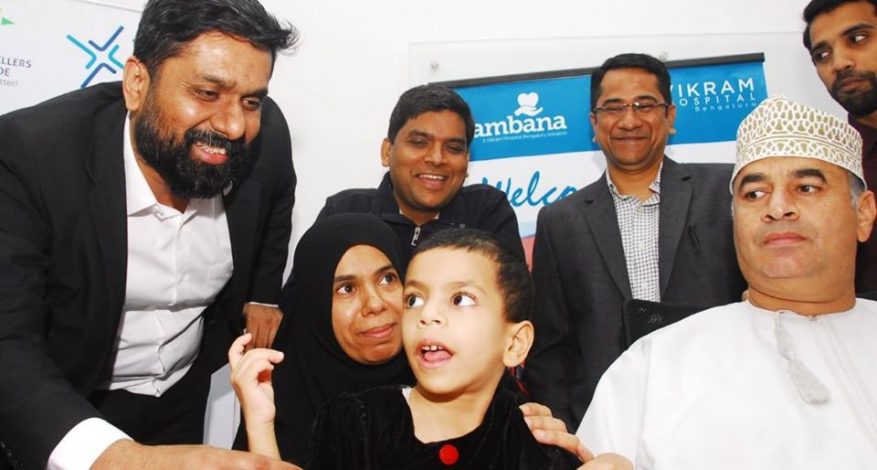
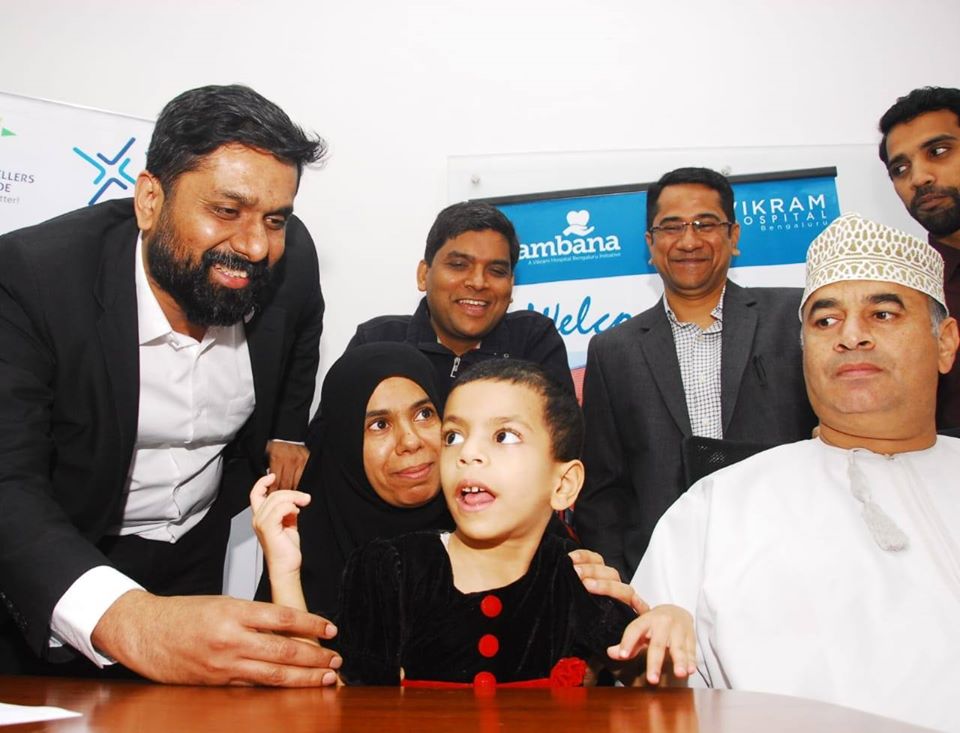
A 5 yr child who is affected by a rare type of dystonia called DYT16 was managed in Vikram hospital, Bengaluru. Only about 10-12 cases have been described worldwide with this rare disease. The child was completely bed bound and dependent for all the activities. The child underwent Deep Brain Stimulation surgery (DBS), the youngest person to undergo this procedure in India till date. Its been 3 months now and the child is making great improvements. Kudos to all involved. Looking forward to hear more about the recovery curve about this rare disease

READ MORE