Mapping Progressive Supranuclear Palsy in India: The PAIR-PSP Study
Understanding one of the important causes of atypical Parkinsonism
Progressive Supranuclear Palsy, commonly called PSP, is a rare but serious brain disorder that can look like Parkinson’s disease in the beginning. People may develop slowness, stiffness, imbalance, falls, speech difficulty, eye movement problems, memory or behavioral changes, and increasing dependence in daily activities.
PSP is part of a group of brain disorders called tauopathies, where abnormal accumulation of a protein called tau affects brain cells. Tau is also important in other neurodegenerative conditions, including Alzheimer’s disease and frontotemporal dementia. This makes PSP scientifically important not only as a movement disorder, but also as a window into broader brain degeneration.
In India, PSP is an important cause of atypical parkinsonism seen in neurology and movement disorder clinics. Yet, until recently, most large PSP studies came from Europe and North America. Indian and South Asian populations have remained underrepresented in global PSP research, despite India’s large population, genetic diversity, and wide range of clinical and environmental backgrounds. The PAIR-PSP paper specifically highlights this need for large Indian datasets to enrich global understanding of PSP and tauopathies.

What was Project PAIR-PSP?
PAIR-PSP stands for a pan-India collaborative effort to study Progressive Supranuclear Palsy across the country. The study was conducted through the Parkinson’s Research Alliance of India, with participation from 18 movement disorder centers across India, in partnership with MedGenome and support from the Global Parkinson’s Genetics Program.
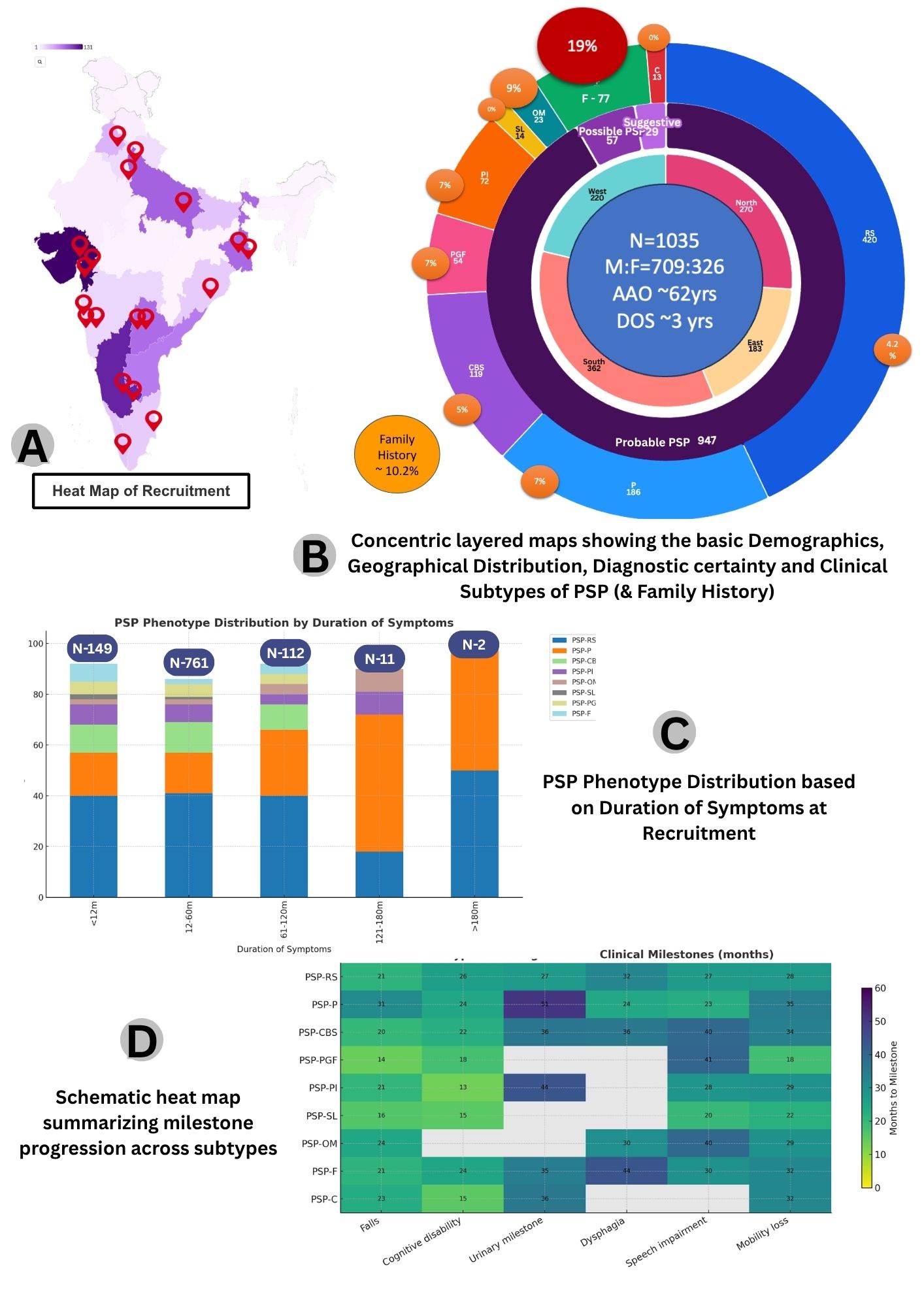
The study included 1,035 people with PSP, making it one of the largest systematically studied PSP cohorts from India and South Asia. Patients were recruited from different parts of India, including South, North, West, and East India, helping create a truly pan-Indian picture of PSP.
What did we learn?
One of the most important messages from this study is that PSP is not one single clinical story.
The classic form, called PSP-Richardson’s syndrome, was the most common. But many patients had other forms, including PSP-Parkinsonism, PSP-corticobasal syndrome, PSP-frontal, PSP-postural instability, PSP-progressive gait freezing, PSP-ocular motor, PSP-speech/language, and PSP-cerebellar presentations. This means PSP can affect people in many different ways and may not always present as a textbook case.
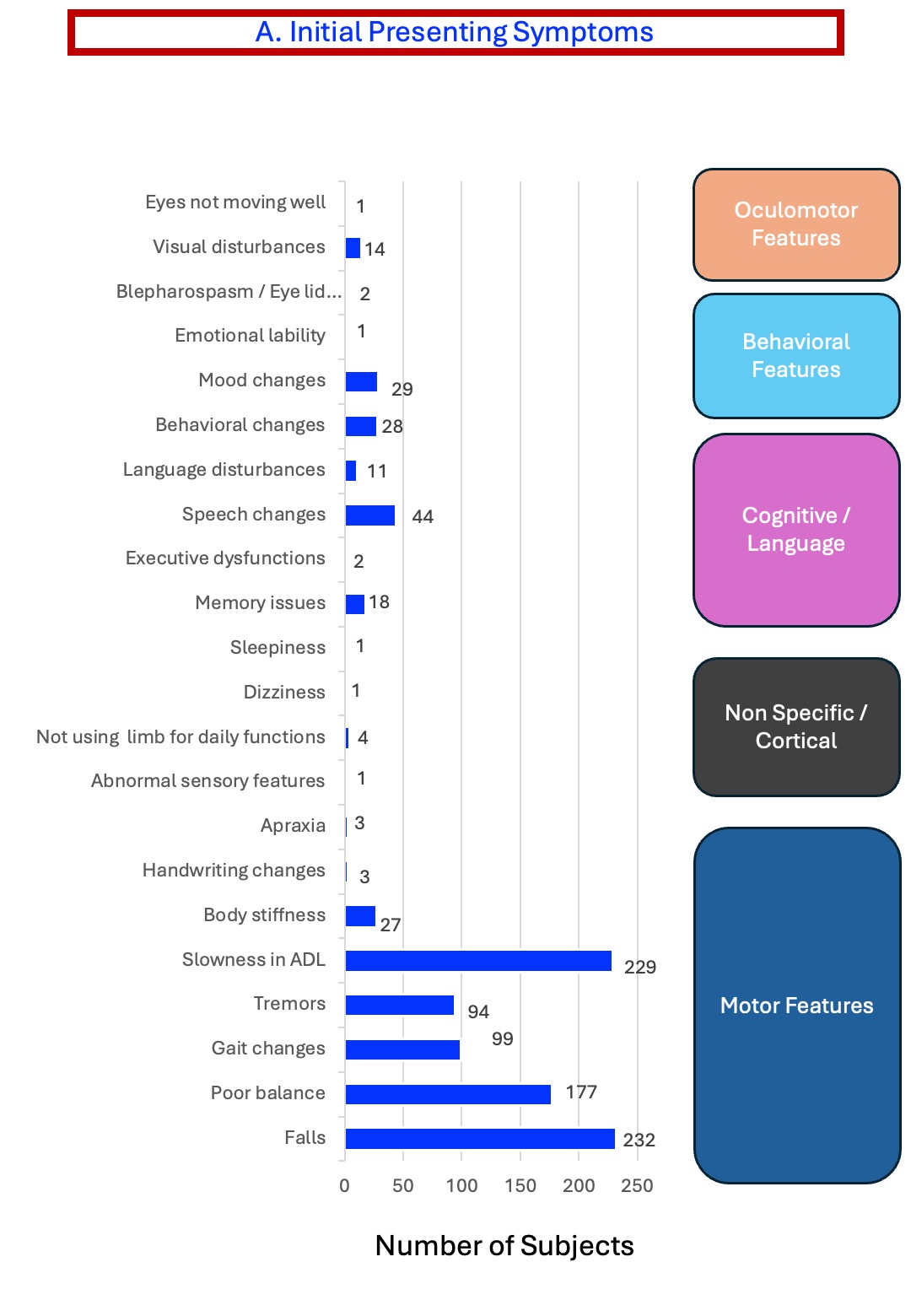
For many families, the first symptoms may appear ordinary: repeated falls, slowing down in daily activities, poor balance, gait change, tremor, speech change, mood or behavioral change, memory issues, or visual problems. These symptoms are sometimes mistaken for normal aging, weakness, carelessness, or Parkinson’s disease.
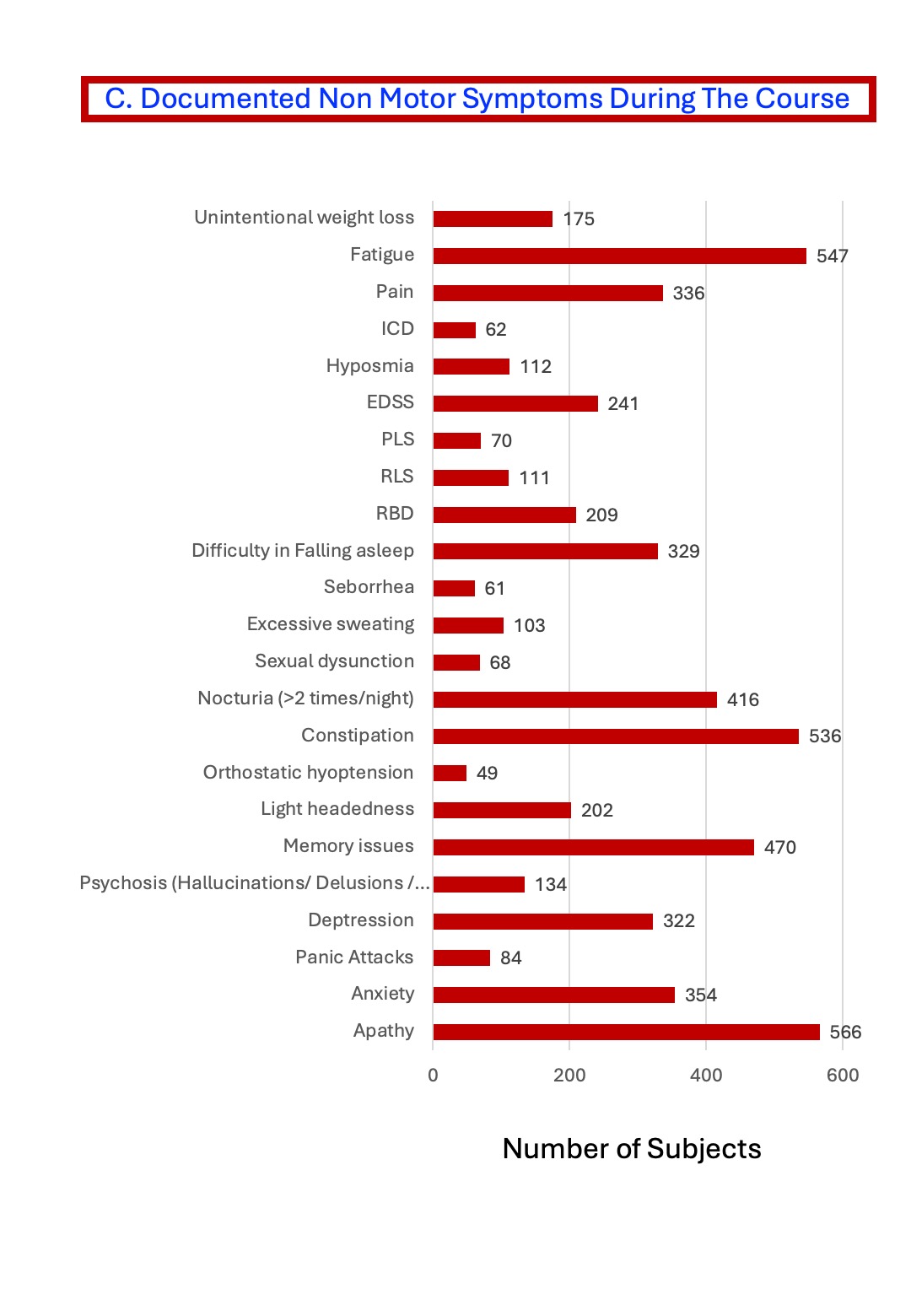
The study also showed that PSP is not only a movement disorder. During the course of illness, many patients had non-motor symptoms such as fatigue, apathy, constipation, urinary problems, memory difficulties, anxiety, depression, sleep problems, REM sleep behavior disorder, pain, and autonomic symptoms. This reinforces that PSP affects not just walking and balance, but the whole person and the whole family.
Why do subtypes matter?
Different PSP subtypes appear to progress at different speeds.
Some forms, such as PSP-progressive gait freezing and PSP-speech/language, showed earlier falls or rapid speech and cognitive involvement. PSP-Parkinsonism showed a relatively slower progression and was more common among longer-duration survivors. The study’s milestone analysis showed that important events such as repeated falls, cognitive disability, urinary dependence, speech decline, swallowing difficulty, wheelchair dependence, and need for full-time caregiving can occur at different times depending on the subtype.
This is important for counselling families. It also matters for future clinical trials, because all PSP patients may not progress in the same way.
Why is this important for the general public?
This study helps raise awareness that:
Not every Parkinsonism is Parkinson’s disease.
If a person has early falls, poor balance, difficulty moving the eyes, speech or swallowing difficulty, poor response to Parkinson’s medications, or early cognitive/behavioral change, PSP should be considered.
PSP affects families deeply.
Caregiver burden can be high because PSP affects movement, speech, swallowing, thinking, mood, sleep, bladder, bowel, and independence.
Early recognition matters.
Although there is currently no cure, timely diagnosis helps families plan physiotherapy, fall prevention, speech and swallowing care, nutrition, home safety, caregiver support, and future care needs.
Why is this important for science?
PAIR-PSP adds an Indian layer to the global PSP map.
Most large PSP datasets have historically come from Western populations. India brings genetic diversity, regional diversity, environmental diversity, and unique healthcare realities. The study therefore helps global researchers understand which features of PSP are universal and which may vary across populations.
It also creates a foundation for future work in:
- genetic studies
- tau biology
- biomarker development
- natural history tracking
- clinical trial readiness
- ancestry-aware neurodegeneration research
- better patient and caregiver support models
The study also emphasizes that its multicenter structure, specialist-driven diagnosis, centralized data capture, and integration with genetic sampling create a strong platform for future research in rare neurodegenerative diseases in India.
Our message
PSP is rare, but its impact is large.
It affects walking, balance, eyes, speech, swallowing, thinking, mood, sleep, bladder, bowel, independence, and family life. The PAIR-PSP study shows that India has the clinical strength, collaborative network, and research capacity to contribute meaningfully to the global understanding of PSP and tau-related brain disorders.
This work is not just about documenting a disease.
It is about building a roadmap for earlier recognition, better care, stronger research, and future therapies.
Read the full article:
Progressive Supranuclear Palsy in India: Insights from a Large Multicenter Clinical Cohort — Project PAIR-PSP
Published in Movement Disorders Clinical Practice
https://movementdisorders.onlinelibrary.wiley.com/doi/10.1002/mdc3.70672